Age and identity
Both partners should be at least 18 and their identity details should remain consistent across the application records.

A same sex partner visa application may be based on marriage, civil partnership, a planned ceremony or a qualifying durable unmarried relationship, depending on the couple’s circumstances and the UK-based partner’s status.
Marriage, civil partnership, engagement or a durable unmarried relationship can require different supporting evidence.
The same sex partner visa route depends on whether the couple are married, civil partners, planning a UK ceremony or relying on a durable unmarried relationship.
The application should identify the correct relationship category, confirm the UK-based partner’s status and explain how the relationship is genuine, continuing and intended to continue in the United Kingdom.
Financial circumstances, English-language evidence, accommodation, previous relationships and the applicant’s immigration history may also need to be reviewed as part of the route.
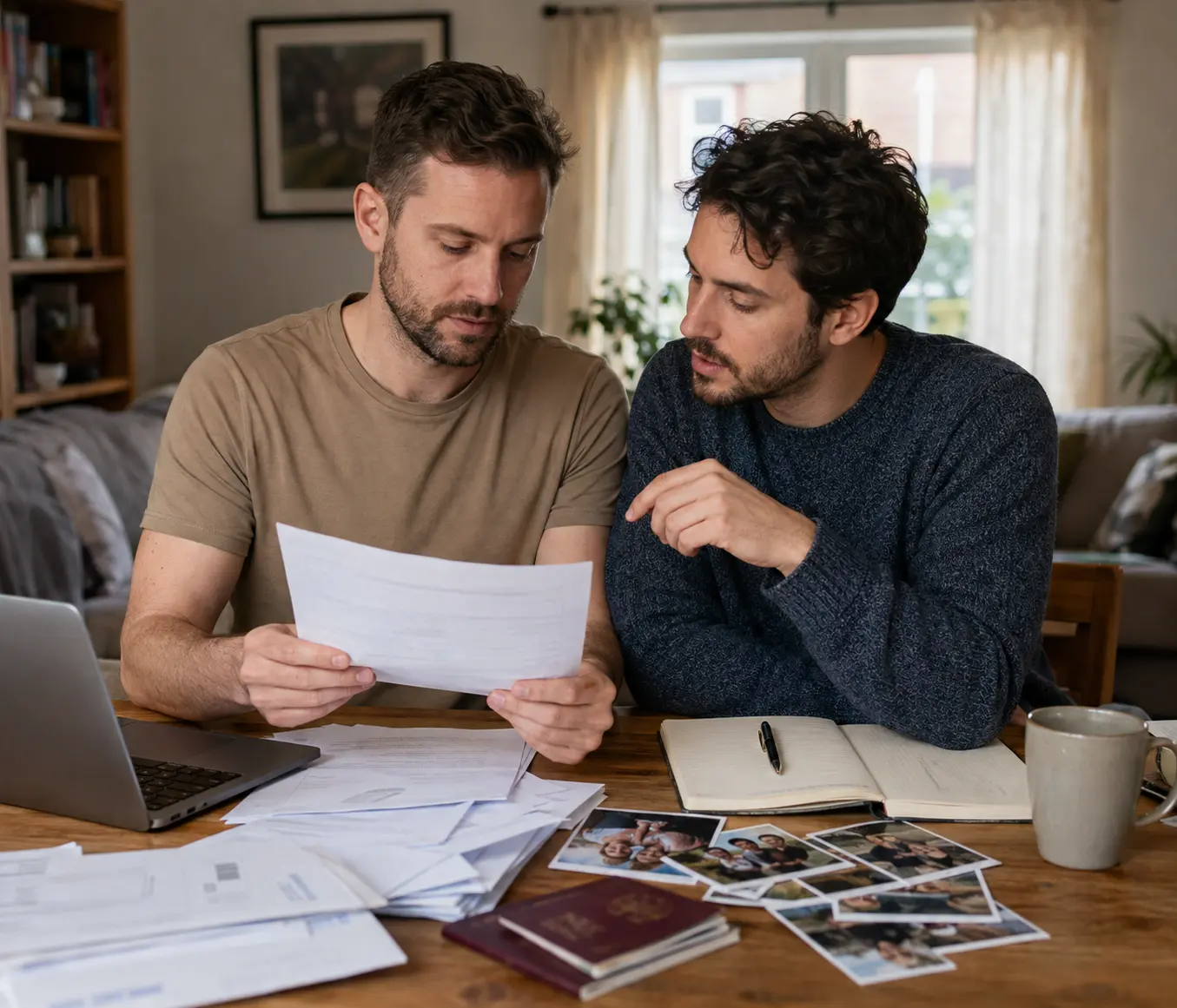
Relationship dates, legal records, living arrangements and future plans should work together.
These areas provide an initial overview of the route. The complete requirements and evidence will depend on the relationship category, immigration history and individual circumstances.
Both partners should be at least 18 and their identity details should remain consistent across the application records.
The UK-based partner must hold a nationality or immigration status accepted under the relevant family route.
The application should fit a recognised marriage, civil partnership, proposed ceremony or qualifying durable relationship.
The relationship should be genuine and continuing, with clear plans to live together permanently in the UK.
A family partner visa is not necessarily the correct route where the UK-based partner holds temporary permission under a work or study category.
In those circumstances, the relevant route may instead be a dependant partner application connected to the main visa holder.
Eligibility depends on both partners’ identities and ages, the UK-based partner’s status, the selected relationship category, whether the relationship is genuine and continuing, and the wider partner-route requirements.
Both partners must be at least 18. Names, dates of birth, nationality details and previous immigration records should remain consistent throughout the application.
The UK-based partner must hold a nationality or immigration status accepted under the family route, such as British or Irish citizenship or qualifying settled permission.
The application should identify whether the couple are married, civil partners, planning a recognised ceremony or relying on a durable unmarried relationship.
The couple should show that the relationship is genuine and continuing and that they intend to live together permanently in the United Kingdom.
A same sex partner visa application should present a complete and consistent account of the relationship category, shared life, financial position, English-language evidence and proposed UK accommodation.
The precise requirements depend on whether the application is based on marriage, civil partnership, a planned ceremony or a durable unmarried relationship, together with the applicant’s immigration position.
The legal or durable relationship relied on should be identified clearly and supported by the records relevant to that category.
The application should explain how the relationship developed, how the couple maintain their shared life and why any periods apart occurred.
Identify the current financial rule that applies before collecting payslips, bank statements, employment records, savings evidence or documents supporting another permitted financial basis.
The applicant may need accepted English-language evidence or an exemption, and the application should show that suitable UK accommodation will be available.
Legal recognition, living arrangements, periods apart, cultural circumstances, previous applications and any permitted exemption can affect how an individual requirement is considered.
Documents should confirm both partners’ identities and immigration positions, establish the relationship category and support the relationship, financial, English-language and accommodation requirements relied on.

The documents required will depend on the application and circumstances. These groups provide a practical starting structure.
Confirm who each partner is and the immigration position relied on for the route.
Identify the precise relationship category and provide the legal or historical records relevant to it.
Explain how the relationship developed, how the couple maintain their shared life and why any periods apart occurred.
Support the financial basis, English-language position and intended UK accommodation relied on in the application.
Evidence should be complete and readable. Documents not in English or Welsh may require an appropriate certified translation.
A structured process helps keep the selected relationship category, application form, immigration information, financial records and supporting evidence consistent from preparation through to the final decision.
Review whether the application should be based on marriage, civil partnership, a proposed ceremony or a durable unmarried relationship, together with the partner’s UK status and the applicant’s current immigration position.
Prepare the online application using information that agrees with the identity, relationship, financial, English-language and accommodation documents.
Check the declarations and final answers before submitting the online application and completing the payments requested for the application.
Follow the instructions provided after submission, including uploading supporting evidence and attending an appointment for biometric information where required.
Retain copies of the form, submitted evidence and correspondence. When a decision is received, review its terms and any practical next steps.
Identity checks, document-upload arrangements and any further requests can depend on where and how the application is made.
General answers about relationship categories, marriage, civil partnerships, unmarried partners, living apart, applications from inside the UK and dependant partner routes.
Prepare a short summary of the relationship category, immigration status, important dates, living arrangements and intended application date.
Start Your EnquirySame-sex couples use the relevant family partner category for their circumstances. The application may be based on marriage, civil partnership, a proposed marriage or civil partnership, or a qualifying durable unmarried relationship.
Review the official GOV.UK partner and spouse visa guidance for the current family-partner requirements.
A same-sex marriage or civil partnership can be relied on where it is legally recognised in the United Kingdom. The application must also establish the partner’s accepted UK status and the wider financial, English-language and relationship requirements.
Unmarried partners may qualify where they can show a durable relationship similar to marriage or civil partnership that has existed for at least two years. The evidence should explain the relationship history and ongoing commitment.
The official durable-relationship rules are available in Appendix Relationship with Partner.
Living together is not always required where there is a credible reason the couple cannot do so. The application should explain the circumstances and provide evidence of regular communication, visits, financial or practical support and continuing commitment.
That depends on the applicant’s existing immigration permission and how they entered the UK. The switching position should be checked before an application is started.
A family partner visa may not be the appropriate route. Depending on the main visa category, the applicant may need to consider a dependant partner application instead.
GOV.UK explains the distinction between a family visa and a dependant route in the official family visa overview.
Discuss the relationship category, partner’s UK status, relationship history, living arrangements, periods apart, financial position, English requirement, accommodation and available supporting evidence.