Settled immigration status
The applicant should normally hold indefinite leave to remain, settled status or another accepted form of freedom from immigration time restrictions.

A British citizenship application by naturalisation should be prepared around the correct residence basis, settled status, absences, exact physical presence, English, Life in the UK and good-character requirements.
Status dates, residence, absences, referee details and supporting documents should form one consistent application.
British citizenship by naturalisation may be available to an eligible adult who meets the applicable status, residence, knowledge and good-character requirements.
Under the usual naturalisation route, an applicant generally needs five years of UK residence and normally must have held indefinite leave to remain or settled status for at least twelve months. A spouse or civil partner of a British citizen follows a different three-year residence basis and may apply as soon as settled status is held.
The application date must also be checked carefully because the applicant normally needs to have been physically present in the UK exactly five years before applying, or three years before applying under the British-spouse route.
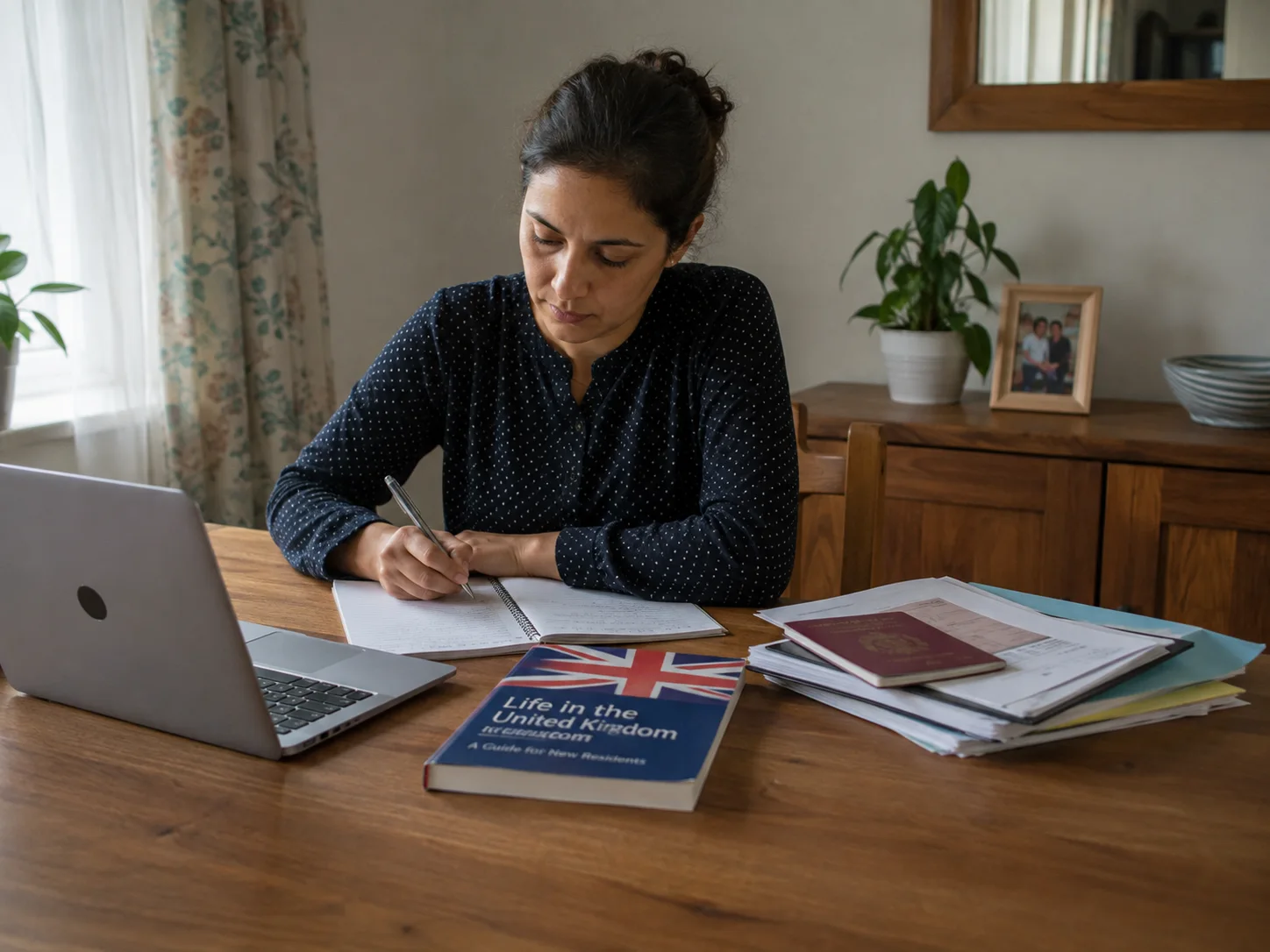
Status dates, residence, travel, referee details and declarations should agree across the application.
These areas provide an initial overview. The detailed assessment depends on the naturalisation basis, settled status, residence period, absences, good character and supporting records.
The applicant should normally hold indefinite leave to remain, settled status or another accepted form of freedom from immigration time restrictions.
The standard basis normally uses five years of residence, while a spouse or civil partner of a British citizen normally relies on a three-year residence period.
Travel dates should be recorded carefully, including whether the applicant was physically present in the UK on the exact date at the start of the relevant three- or five-year period.
English-language evidence, the Life in the UK Test, good-character declarations and any relevant immigration, criminal or financial history should be addressed.
Many adults apply for citizenship by naturalisation. Children and people with a specific entitlement under nationality law may instead need a registration application.
The correct nationality route should be identified before applying because eligibility, forms, evidence and the legal basis can differ between naturalisation and registration.
British citizenship eligibility can depend on age, freedom from immigration time restrictions, residence, absences, exact physical presence, English, Life in the UK and good character. Under the standard five-year route, the intention to continue living in the UK should also be considered.
The applicant must be an adult and normally hold indefinite leave to remain, settled status or another accepted status without an immigration time limit.
The applicant should meet the applicable five-year or British-spouse three-year residence basis and choose an application date that satisfies the exact physical-presence rule.
All travel should be listed accurately and checked against the applicable absence limits. Immigration compliance during the relevant period should also be reviewed.
The applicant should provide accepted English and Life in the UK evidence and disclose information relevant to the good-character assessment.
The application should show that the applicant satisfies the correct naturalisation basis and has chosen an application date that fits the residence rules.
The assessment also includes settled status, absences, physical presence, immigration compliance, English, Life in the UK and good character.
Confirm the status relied on, whether the usual twelve-month settled-status period applies and whether the standard or British-spouse residence basis is being used. Under the standard naturalisation route, the intention to continue living in the UK should also be addressed.
The residence period, exact qualifying-date presence and every relevant absence should be recorded and checked before the application date is fixed.
The applicant should review immigration compliance and disclose criminal, civil, financial, tax or other information that may be relevant to the good-character assessment.
The applicant should provide accepted evidence of English and a Life in the UK Test pass, or establish that an applicable exemption applies.
Citizenship applications are assessed individually. Children are normally considered under registration provisions rather than included within an adult naturalisation application.
Documents should establish identity, settled status, residence, travel history, English and Life in the UK evidence, referee details and relevant declarations.
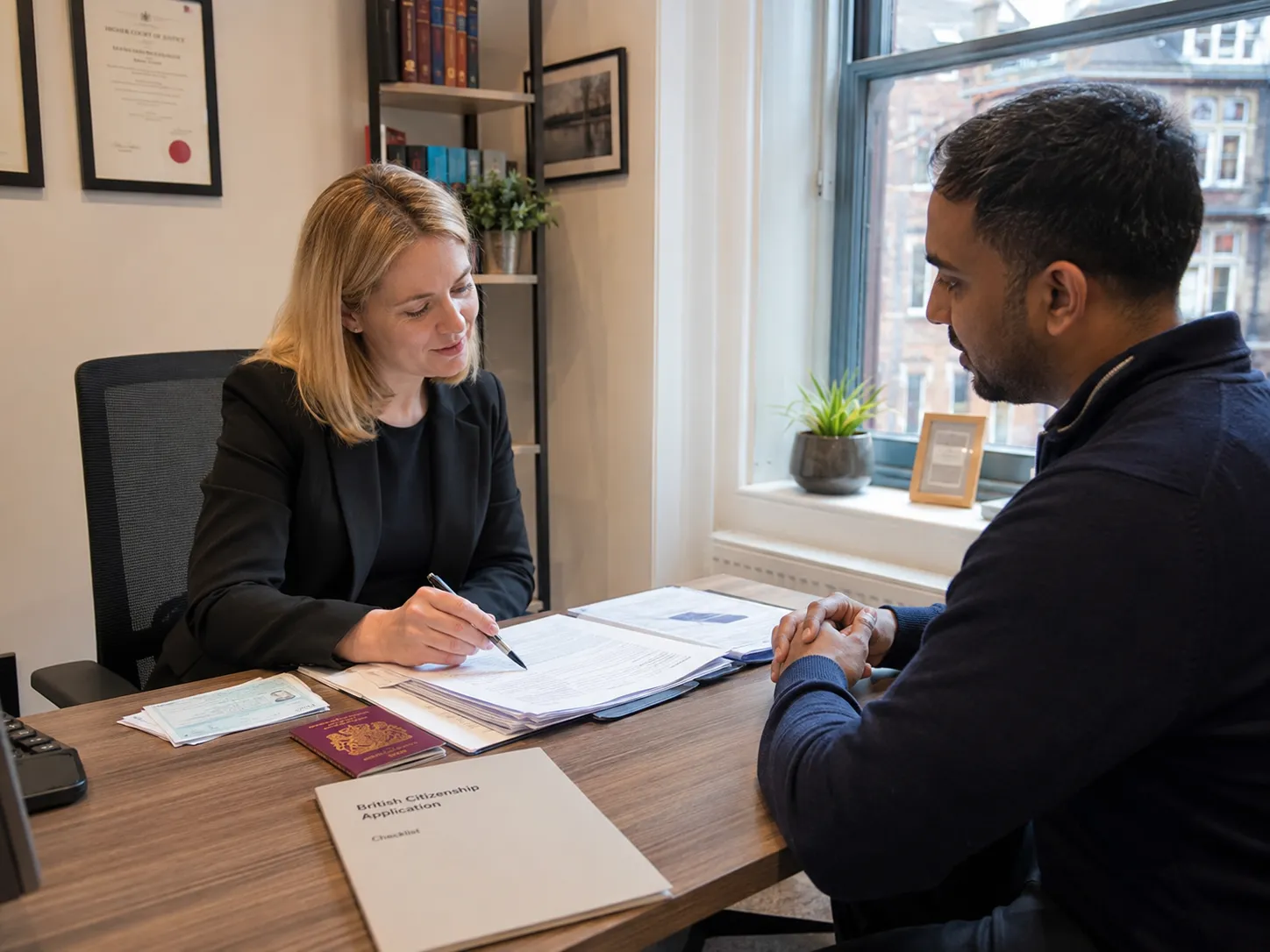
The documents required depend on the naturalisation basis and the applicant’s history. These groups provide a practical starting structure for preparing the application.
Confirm the applicant’s identity, nationality and the settled status relied on for naturalisation.
Create a dated record of UK residence and the status history relied on for the application.
Support the travel schedule and confirm presence in the UK on the exact date at the start of the relevant residence period.
Provide the knowledge evidence, referee information and records needed to support the application declarations.
Evidence should be complete and readable. Documents not in English or Welsh may require an appropriate certified translation.
A structured British citizenship application process helps keep the naturalisation basis, residence calculation, declarations, referee details, online form and supporting documents consistent.
Review age, settled status, the standard or British-spouse residence basis and the earliest suitable application date.
Create a dated schedule covering UK residence, settled status, absences, physical presence, immigration compliance and knowledge requirements.
Check the online answers, good-character declarations, referee information and supporting documents together before submitting the naturalisation application.
Follow the instructions issued after submission, including document upload and biometric enrolment for identity verification.
Retain the form, evidence and correspondence. If the application is approved, follow the instructions for the citizenship ceremony and later British passport application.
An adult naturalisation applicant normally becomes a British citizen only after attending the citizenship ceremony and making the required oath or affirmation and pledge.
These answers provide a general introduction. The correct position will depend on settled status, residence, absences, the application date, knowledge requirements and personal history.
Prepare a summary of settled status, UK residence, travel, English and Life in the UK evidence, referees and any relevant good-character matters.
Start Your EnquiryNo. Indefinite leave to remain or settled status can provide an important basis for naturalisation, but the applicant must still make a separate citizenship application and satisfy all applicable requirements.
Under the usual five-year naturalisation basis, applicants normally wait twelve months after becoming settled. A spouse or civil partner of a British citizen may apply as soon as qualifying settled status is held if the three-year residence requirements are met. See the GOV.UK naturalisation eligibility guidance and the British-spouse citizenship guidance .
The applicant normally needs to have been physically present in the UK exactly five years before the application date, or exactly three years before applying as the spouse or civil partner of a British citizen.
Yes. All departures and returns should be listed accurately and checked against the absence rules. The Home Office may consider discretion in some circumstances, but this should not be assumed.
Many adult naturalisation applicants must satisfy the knowledge-of-language requirement and pass the Life in the UK Test. Accepted evidence and exemptions depend on the applicant's circumstances. GOV.UK explains the accepted English-language evidence for citizenship .
Children are not added to an adult naturalisation application. A separate registration application is normally required, and the correct legal basis depends on the child’s birth, parents and immigration circumstances.
GOV.UK currently lists the adult naturalisation cost as £1,839, consisting of the application fee and citizenship ceremony fee. A standard decision is usually made within six months. Eligible applicants applying from within the UK can also use the citizenship priority service for an additional fee, although complex cases can take longer. Check the current GOV.UK citizenship fees and processing information before applying.
Discuss settled status, residence, absences, the application date, English, Life in the UK, referees and good-character information before moving forward.