Age and identity
Both partners should be at least 18 and their identity details should remain consistent across the application records.

A fiance proposed civil partner visa may allow an eligible applicant to enter the UK to marry or form a civil partnership with a qualifying UK-based partner before applying to remain as their spouse or civil partner.
Relationship dates, ceremony arrangements, immigration records and supporting documents should work together.
The route is intended for an eligible applicant planning to enter the United Kingdom, marry or form a civil partnership and continue family life with a qualifying UK-based partner.
A fiance proposed civil partner visa application should explain the partner’s UK status, how the relationship developed, when the couple met in person, the planned ceremony and their intention to live together permanently afterwards.

Relationship dates, ceremony arrangements, immigration records and supporting documents should work together.
These areas provide an initial overview of the route. The complete requirements and evidence will depend on the relationship history, ceremony arrangements, immigration background and individual circumstances.
Both partners should be at least 18 and their identity details should remain consistent across the application records.
The UK-based partner must hold a nationality or immigration status accepted under the family route.
The relationship should be genuine and continuing, with a clear intention to marry or form a civil partnership in the UK.
The couple should plan to complete the ceremony within the permitted period and live together permanently in the UK afterwards.
This family visa route is intended for applicants who plan to remain in the UK with their partner after the marriage or civil partnership and later apply as a spouse or partner.
A Marriage Visitor visa is designed for a person who plans to marry or form a civil partnership in the UK but does not intend to remain in the UK afterwards.
Eligibility depends on both partners’ identities and ages, the UK-based partner’s qualifying status, the relationship history, the planned UK ceremony and the wider financial, English-language and accommodation requirements.
Both partners must be at least 18. Names, dates of birth, nationality details and previous immigration records should remain consistent throughout the application.
The UK-based partner must hold a nationality or immigration status accepted under the family route, such as British or Irish citizenship or qualifying settled permission.
The relationship should be genuine and continuing. Any previous marriages or civil partnerships should have ended before the planned UK marriage or civil partnership.
The couple should intend to marry or form a civil partnership in the UK within the permitted period and live together permanently after the ceremony.
The application should present a complete and consistent account of the relationship, intended UK ceremony, financial circumstances, English-language position, accommodation and plans for family life after the ceremony.
The precise evidence and assessment will depend on the application history and the basis used to meet each requirement.
The relationship should be genuine and continuing, with a clear intention to marry or form a civil partnership and live together permanently in the UK afterwards.
The couple should intend to marry or form a civil partnership in the UK within the permitted period and provide practical evidence of the planned ceremony.
Most new partner-route applicants must usually demonstrate qualifying annual income of at least £29,000, although different rules may apply where specified benefits, transitional arrangements, savings or another permitted financial basis are relied upon.
The applicant may need accepted English-language evidence or an exemption, and the application should show that suitable UK accommodation will be available.
A fiancé or proposed civil partner cannot work or study in the UK during the engagement period. After the ceremony, a further partner application is required before those rights are available.
Supporting documents should confirm both partners’ identities and immigration positions, explain the relationship, support the planned UK ceremony and address the financial, English-language and accommodation requirements.
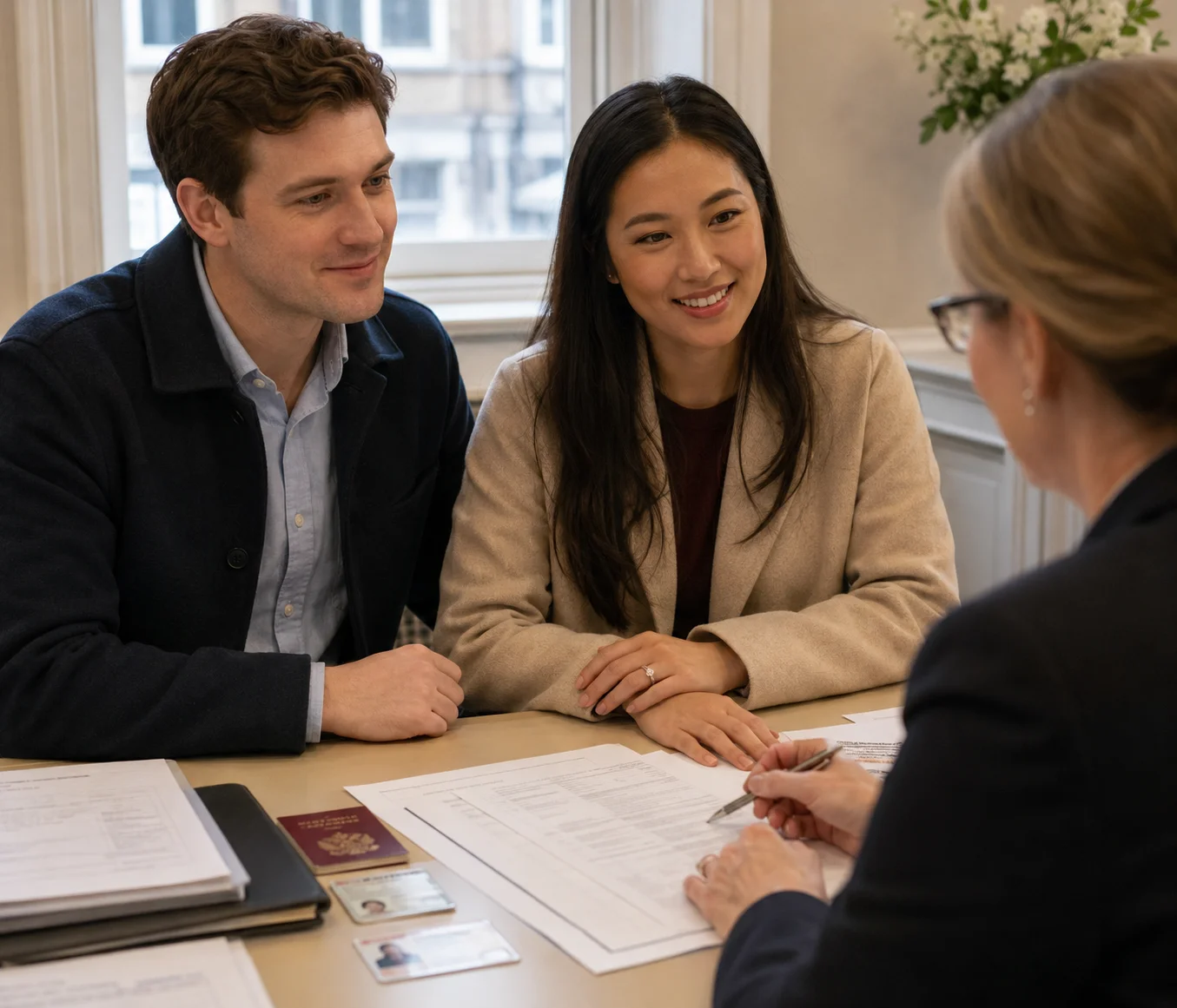
The documents required will depend on the application and circumstances. These groups provide a practical starting structure.
Confirm who each partner is and the immigration position relied on for the route.
Explain how the relationship developed, how the couple remain committed and why any periods apart occurred.
Show a genuine intention to marry or form a civil partnership in the UK within the permitted period.
Support the financial basis, English-language position and intended accommodation relied on in the application.
Evidence should be complete and readable. Documents not in English or Welsh may require an appropriate certified translation.
A structured process helps keep the online application, relationship evidence, ceremony plans, financial records and information supplied after submission consistent.
Review the relationship, partner’s UK status, applicant’s immigration history and whether the fiancé or proposed civil partner route is the correct entry route for the planned UK ceremony.
Prepare the online application using information that agrees with the identity, relationship, ceremony-planning, financial, English-language and accommodation documents.
Check the declarations and final answers before submitting the online application and completing the payments requested for the application.
Follow the instructions provided after submission, including uploading supporting evidence and attending an appointment for biometric information where required.
If permission is granted, follow its conditions, travel to the UK and complete the marriage or civil partnership within the permitted period. After the ceremony, apply for further permission as a spouse or partner.
A fiancé or proposed civil partner cannot work or study during the engagement period. Those rights are available only after the later partner application is approved.
General answers about eligibility, ceremony timing, employment restrictions, applications from outside the UK and the further partner application required after the marriage or civil partnership.
Prepare a short summary of the relationship, immigration status, ceremony plans and intended application date.
Start Your EnquiryThe fiancé or proposed civil partner family route is for a person who intends to remain in the UK with their partner after the ceremony. A Marriage Visitor visa is for a person who will leave the UK after marrying or forming a civil partnership.
You can also review the official GOV.UK family visa guidance and the GOV.UK marriage and civil partnership guidance .
The couple must plan to marry or form a civil partnership in the UK within six months of the applicant’s arrival. The application should include credible evidence of those arrangements.
No. A person on this route cannot work or study during the engagement period. After the ceremony, they must obtain further permission as a spouse or partner before those rights are available.
This route is generally used by a person applying from outside the UK to enter before the ceremony. Anyone already in the UK should check their current permission and the correct route before making an application.
The applicant should not assume that permission will continue automatically. Review the reason for the delay, the expiry date and the available immigration options before the permitted period ends.
After the ceremony, the applicant must apply for further permission as a spouse or civil partner. If that application is approved, they can work or study in the UK under the new permission.
Discuss the relationship history, partner’s UK status, ceremony plans, financial position, English-language requirement, accommodation, supporting evidence and intended application date.