Identify the current matter
Clarify whether the issue concerns an application, protection claim, refusal, review or appeal.

Human rights appeals may involve asylum claims, immigration refusals, discretionary leave, personal circumstances, supporting evidence and important procedural deadlines.
Human rights appeals and protection matters require a clear understanding of what has happened, the reasons for any immigration decision and the evidence currently available.
Begin by identifying whether the matter concerns an asylum or human rights application, an existing protection claim, discretionary leave, a Home Office refusal or a possible UK immigration appeal. Keep complete copies of every decision and item of correspondence.
Personal statements, immigration records, family or private life information, medical material, country information and other supporting documents may be relevant depending on the individual circumstances and the issue being considered.
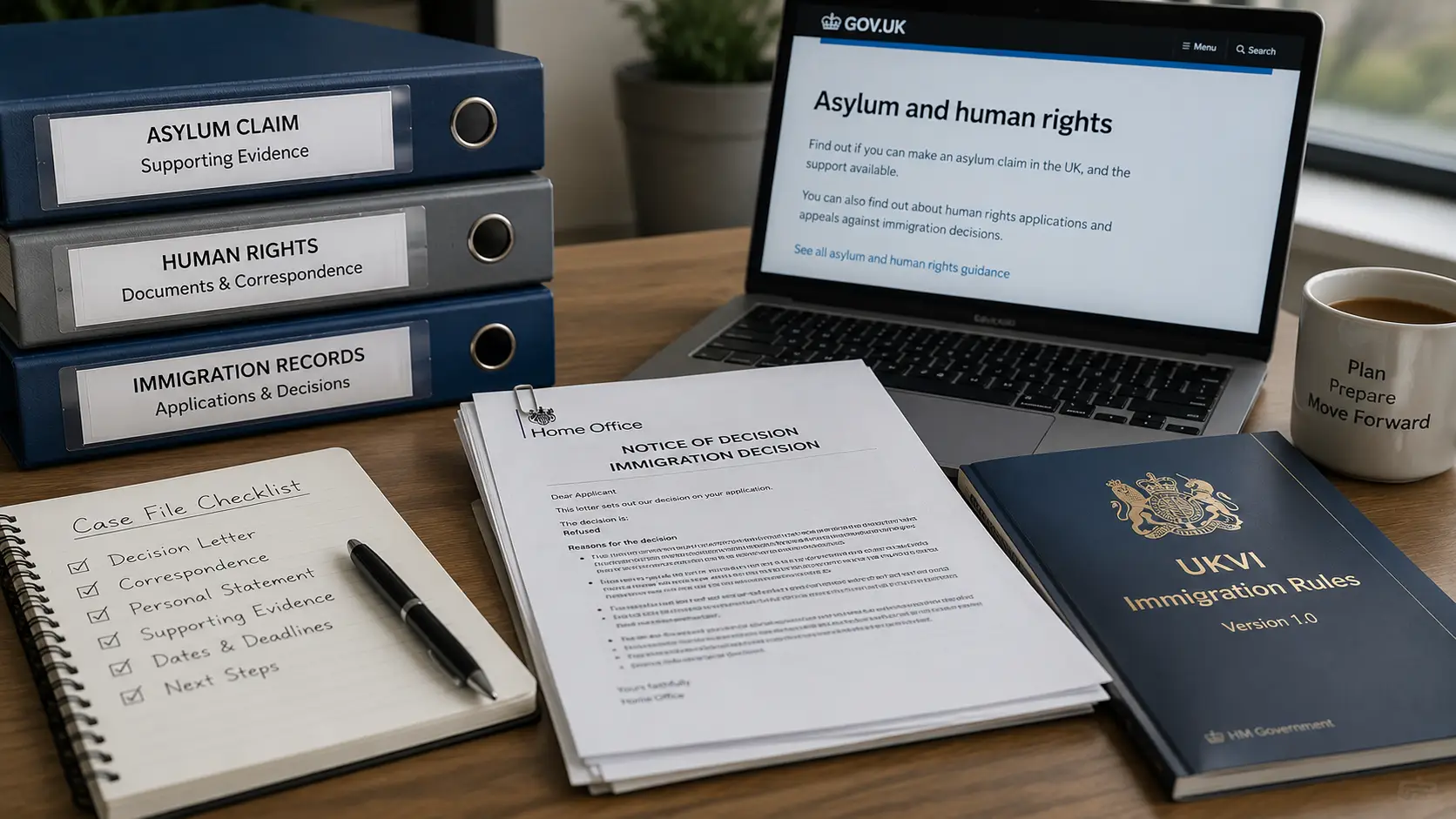
Clarify whether the issue concerns an application, protection claim, refusal, review or appeal.
Note application, interview, decision, receipt and any stated response or appeal dates.
Keep personal statements, immigration documents, correspondence and supporting records together.
A decision letter may explain whether an appeal, administrative review or another step is available and may include an important time limit. Keep the complete letter and record when it was received.
Identify whether your matter concerns asylum and human rights applications, exceptional permission, an immigration refusal or a challenge to a Home Office decision.
For individuals whose safety, family life, private life, health or other important personal circumstances may be relevant to their UK immigration position.
For limited matters where exceptional or compassionate circumstances may require consideration outside a standard immigration route.
For individuals who have received an immigration decision and need to review its reasons, available options for challenge and any important response deadline.
The relevant evidence depends on the personal circumstances, immigration history, application type and any Home Office or tribunal decision already received.
Begin with a clear account of the current concern, relevant immigration history, personal circumstances and any decision or correspondence already received.
Organise records by subject and date so that the personal account, immigration history, decision and supporting material can be reviewed together.
Complete decision letters, notices, interview records and relevant correspondence.
Available passports, identity documents and records showing immigration history or status.
A clear statement or timeline explaining relevant events, experiences and current concerns.
Documents relevant to relationships, residence, care responsibilities and established UK life.
Relevant medical information, assessments or professional reports where available.
Relevant background material connected to the claimed circumstances or identified concern.
Not every category will apply. The relevant material depends on the circumstances, issues identified and stage of the matter.
Bring the personal account, immigration history, decision, important dates and supporting evidence into one organised record before preparing an application or challenge.
Clarify whether the issue concerns a proposed application, existing claim, refusal, review, appeal or another procedural step.
Note when applications, interviews, decisions and correspondence occurred, including any stated response or appeal date.
Organise the relevant events, experiences, relationships, concerns and changes in circumstances in chronological order.
Compare the decision or identified concern with the personal account, previous information and available supporting records.
Arrange correspondence, statements, identity records and supporting material by date and subject before preparing the application or challenge.
Include the current immigration position, important events, date the decision was received, any stated deadline and the main evidence currently available.
General answers about human rights appeals, Home Office decisions, appeal rights, important dates, supporting evidence and protection matters.
Provide the complete decision letter, the date it was received and a short summary of your current immigration and personal circumstances.
Start Your EnquiryKeep the complete decision letter and record the date on which it was received. Review every page, including the reasons for the decision and any section explaining available next steps.
The letter may explain whether an appeal, administrative review or another procedure is available. Any stated time limit should be identified promptly.
No. A person can appeal to the immigration tribunal only where there is a legal right of appeal connected to the particular decision.
The decision letter will usually explain whether an appeal is available or whether the decision may instead be considered through administrative review or another procedure. You can also read the official GOV.UK immigration appeal guidance.
Relevant material may include identity and immigration records, a personal chronology, family or private-life evidence, medical information, professional reports and relevant background material.
The evidence should be connected clearly to the circumstances being relied upon and to any issues identified in a Home Office or tribunal decision.
Discretionary Leave is a form of permission considered in limited circumstances where exceptional or compassionate factors may justify a grant of leave.
It is not a general alternative to the standard immigration routes. The individual circumstances and available evidence must be reviewed carefully.
New information may sometimes be relevant after an asylum or human rights claim has been refused. The correct procedure depends on the existing decision, appeal history and nature of the new material.
The evidence should be reviewed together with the previous claim, decision reasons and any earlier tribunal findings before the next step is selected.
A chronology helps connect important experiences, immigration applications, interviews, decisions, relationships, medical developments and other relevant events.
Dates should be checked against passports, correspondence, previous statements and supporting records so that differences can be identified before the matter is prepared.
The decision should be reviewed promptly. Appeal, review or response procedures may have time limits, and additional time may be needed to obtain records or prepare supporting evidence.
Keep the original correspondence, note when it was received and avoid relying only on a photograph or summary of part of the decision.
Provide a brief summary of your current immigration position, personal circumstances, decision received, important dates, available evidence and the immediate outcome you are seeking.